
第六章、子宮頸小細胞神經內分泌癌 (NECC)
發布日期:2026-04-09
6.1 神經內分泌腫瘤特徵 [14]
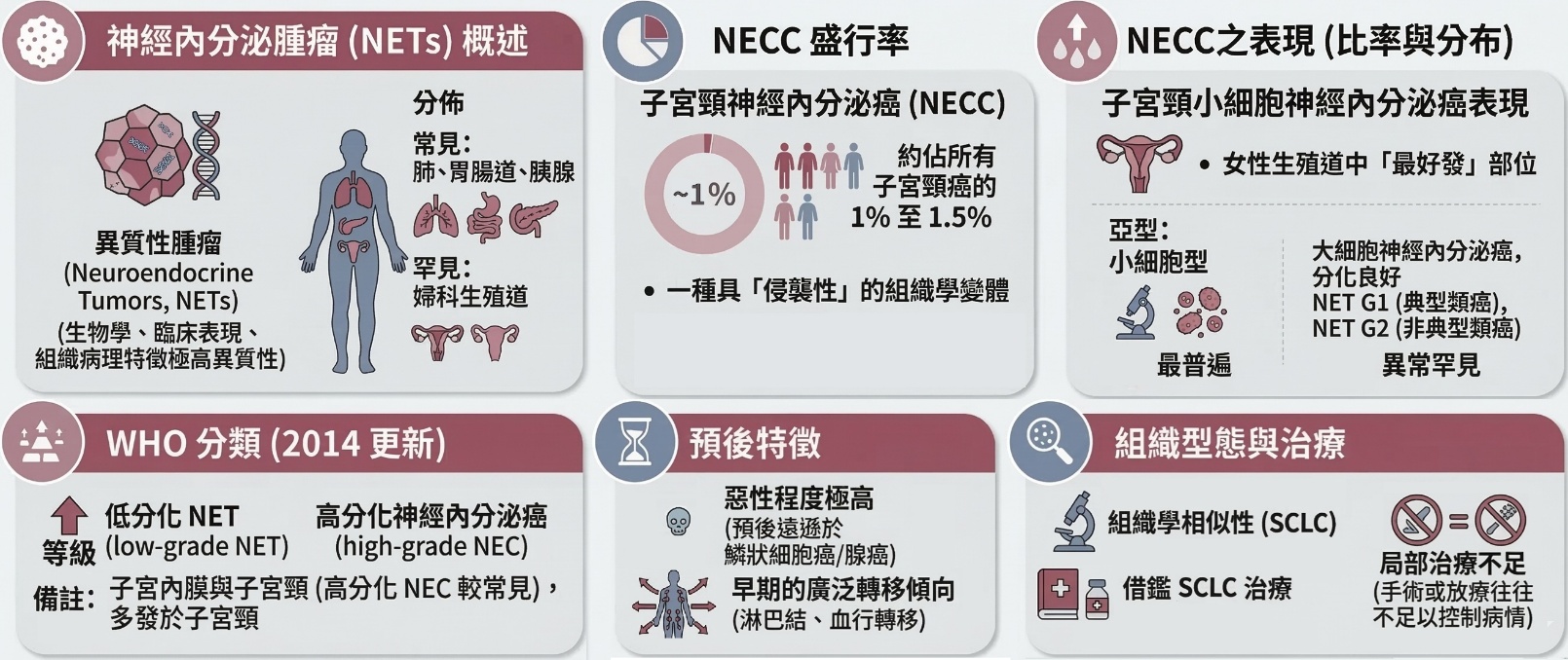
異質性腫瘤:神經內分泌腫瘤 (Neuroendocrine Tumors, NETs) 在生物學、臨床表現以及組織病理學特徵上展現極高異質性的癌症。
分布:常見於肺、胃腸道及胰腺,但在婦科生殖道等較為罕見的部位亦有其蹤跡。
WHO 分類:2014 年WHO分類已更新,採用「低分化NET (low-grade NET)」與「高分化神經內分泌癌 (high-grade NEC)」等術語。在子宮內膜與子宮頸中,高分化 NEC 較為常見,且多發於子宮頸。
盛行率: NECC 約佔所有子宮頸癌的 1% 至 1.5%,是一種具侵襲性的組織學變體。
6.1.1 NECC之表現
比率與分布:子宮頸小細胞神經內分泌癌 (Small Cell Neuroendocrine Carcinoma of the Cervix, NECC):約佔所有子宮頸癌的1%至1.5%。儘管其發生率較低,卻算是女性生殖道中最好發神經內分泌癌的部位,其中又以小細胞型最為普遍,而大細胞神經內分泌癌、分化良好的NET G1 (典型類癌) 與NET G2 (非典型類癌) 則顯得異常罕見。
預後特徵:NECC的惡性程度極高,其預後遠遜於常見的子宮頸鱗狀細胞癌或腺癌,且有早期的廣泛轉移傾向,尤其是傾向於發生淋巴結與血行轉移。
組織型態與治療關聯:診斷初期,許多患者可能已有微小的遠端轉移病灶,使得局部治療 (如手術或放療) 往往不足以控制病情。NECC在組織形態學上與肺部的小細胞癌 (SCLC) 極為相似,目前的臨床治療策略,很大程度上是借鑑自SCLC的治療指引。
6.1.2 病理學原則與免疫組織化學分析
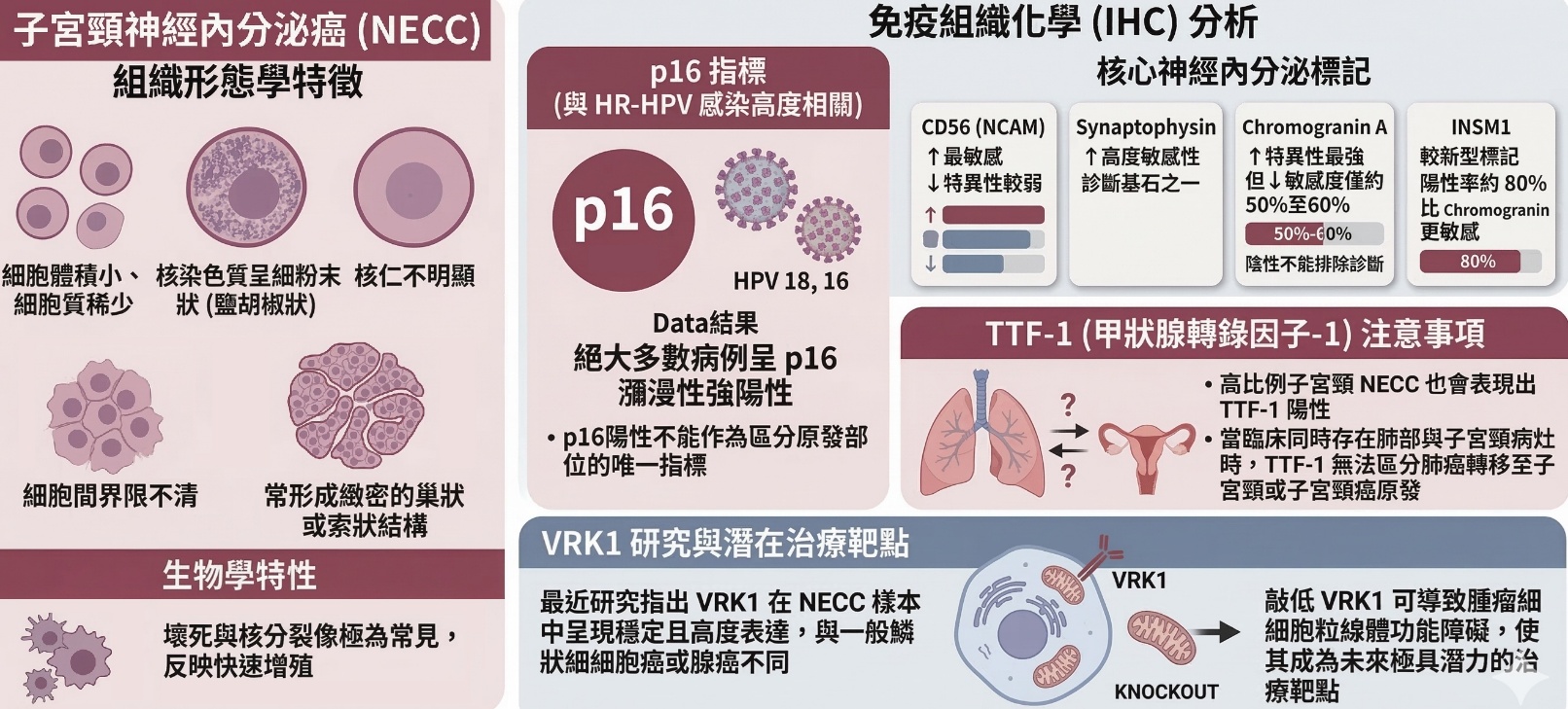
組織形態學特徵:細胞體積小、細胞質稀少、核染色質呈細粉末狀 (鹽胡椒狀) 、核仁不明顯,且細胞間界限不清,常形成緻密的巢狀或索狀結構。壞死與核分裂像極為常見,這反映了其快速增殖的生物學特性。
在診斷NECC時,多種IHC指標的組合應用能提高診斷的準確性:
p16 指標:絕大多數NECC病例呈p16瀰漫性強陽性。這是因為其與高風險型人類乳突病毒 (HR-HPV) 感染高度相關,尤其是HPV 18型與16型 (18型比16型更常出現在神經內分泌亞型中) 。然而p16陽性不能作為區分腫瘤原發部位的唯一指標,因為來自其他部位的神經內分泌癌也可能因其他機制呈現p16陽性。
核心神經內分泌標記:
CD56 (NCAM):這是最敏感的標記物,但在特異性方面較弱。
Synaptophysin:具備高度敏感性,是診斷神經內分泌分化的基石之一。
Chromogranin A:這是特異性最強的標記,但敏感度僅約50%至60%。如果此項呈陰性,並不能排除NECC的診斷。
INSM1 (Insulinoma associated protein 1):作為較新型的標記,其在NECC中的陽性率約為80%,被認為是比 Chromogranin 更敏感且更具診斷價值的工具。
TTF-1 (甲狀腺轉錄因子-1):值得注意的是,高比例的子宮頸NECC也會表現出 TTF-1 陽性。這意味著在遇到臨床上同時存在肺部與子宮頸病灶的患者時,TTF-1無法用來區分這究竟是肺癌轉移至子宮頸,還是子宮頸癌原發。
VRK1 (痘病毒相關激酶1):最近的研究指出,VRK1在NECC 樣本中呈現穩定且高度的表達,與一般鱗狀細胞癌或腺癌的波動性表現不同。降低VRK1可導致腫瘤細胞粒線體功能障礙,這使其成為未來極具潛力的治療靶點。
6.2 臨床評估與分期治療 [14]
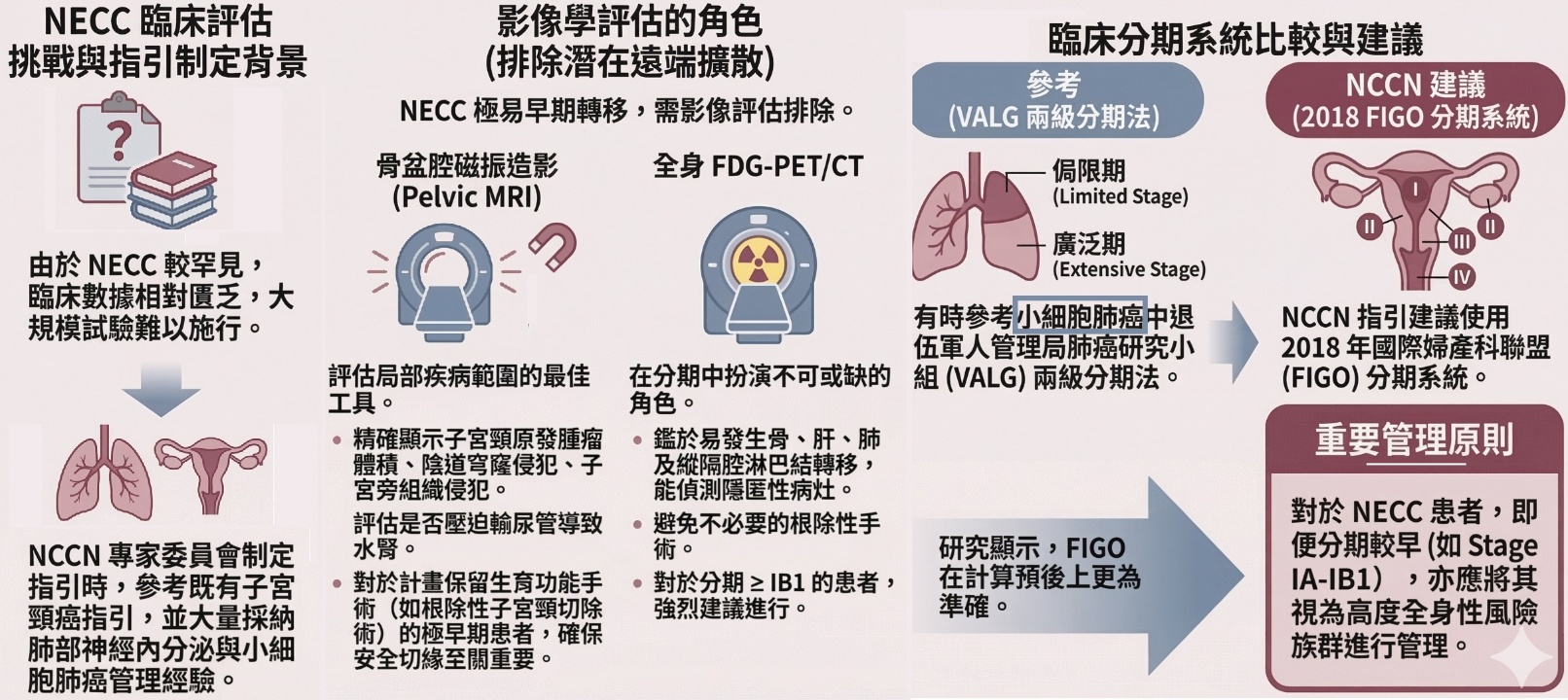
由於NECC較罕見,臨床數據相對匱乏,大規模的臨床試驗難以施行,因此NCCN專家委員會在制定指引時,除了參考既有的子宮頸癌指引外,亦大量採納了肺部神經內分泌與小細胞肺癌的管理經驗。
6.2.1 影像學評估的角色
由於NECC極易發生早期轉移,需藉由影像學評估以排除潛在的遠端擴散:
骨盆腔磁振造影 (Pelvic MRI):MRI被認為是評估局部疾病範圍的最佳工具。它能精確顯示子宮頸原發腫瘤的體積、對陰道穹窿的侵犯程度、對子宮旁組織 (Parametrium) 的侵犯以及是否壓迫輸尿管導致水腎。對於計畫接受保留生育功能手術 (如根除性子宮頸切除術) 的少數極早期患者,MRI對於確保安全切緣至關重要。
全身FDG-PET/CT:PET/CT在NECC 的分期中扮演著不可或缺的角色。鑑於該病容易發生骨、肝、肺以及縱隔腔淋巴結轉移,PET/CT能偵測出隱匿性病灶,進而避免不必要的根除性手術。對於分期大於或等於IB1的患者,應強烈建議進行PET/CT。
6.2.2 臨床分期系統
臨床分期:時而會參考小細胞肺癌中退伍軍人管理局肺癌研究小組 (VALG) 兩級分期法 (分侷限期與廣泛期),但NCCN指引建議使用2018年國際婦產科聯盟 (FIGO) 分期系統。研究顯示,FIGO分期在計算預後上比VALG兩級法具備更為準確。(參考第2.5章)
對於NECC患者,即便分期較早 (如Stage IA-IB1) ,亦應將其視為高度全身性風險族群進行管理。
6.3 NECC不同期別之治療
6.3.1 侷限於子宮頸的早期病變 (≤ 4 cm)
對於腫瘤直徑小於或等於4 cm的患者,建議手術合併輔助化療 ± 放療:
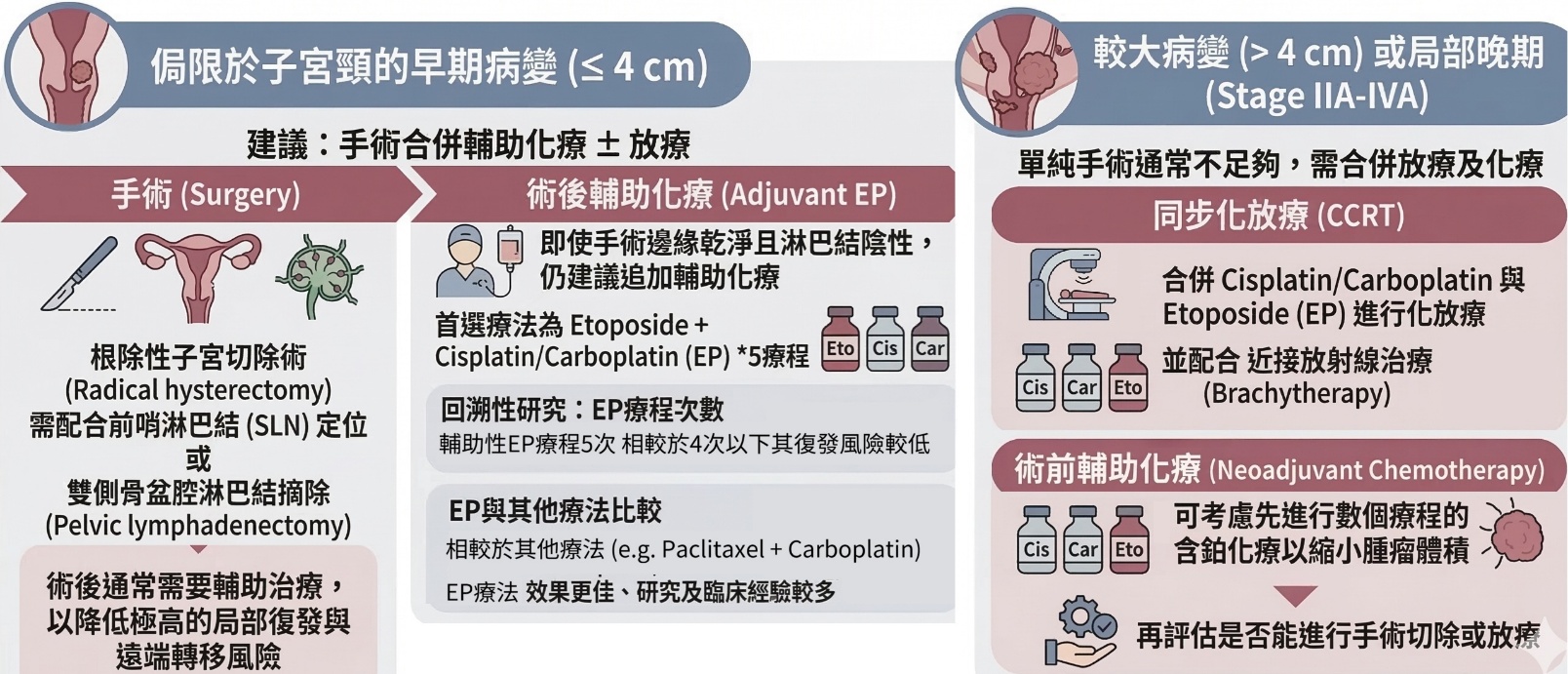
根除性子宮切除術 (Radical hysterectomy):需配合前哨淋巴結 (SLN) 定位或雙側骨盆腔淋巴結摘除 (Pelvic lymphadenectomy)。術後通常需要輔助治療,以降低極高的局部復發與遠端轉移風險。
術後輔助化療 (Adjuvant EP):即使手術邊緣乾淨且淋巴結陰性,仍建議追加輔助化療。首選療法為Etoposide + Cisplatin/Carboplatin (EP) *5療程。根據回溯性研究之結果,進行五次以上的Adjuvant EP療法,其預後較僅做四次以下的患者為佳。且EP療法的效果相較於其他療法(如:Paclitaxel + Carboplatin) 為佳,且研究及臨床經驗較多。[51]
6.3.2 較大病變 (> 4 cm) 或局部晚期 (Stage IIA-IVA)
對於腫瘤體積較大或已擴散至子宮旁的患者,單純手術通常不足夠,需合併放療及化療:
同步化放療 (CCRT):合併Cisplatin/Carboplatin與Etoposide進行化放療,並配合近接放射線治療 (Brachytherapy) 是標準做法。
術前輔助化療 (Neoadjuvant Chemotherapy):可考慮先進行數個療程的含鉑化療以縮小腫瘤體積,再評估是否能進行手術切除或放療。
6.3.3 全身性藥物治療與關鍵臨床試驗解析
在復發性或轉移性NECC的治療,全身性療法是唯一的長期控制手段。然而晚期NECC的治療,大多借鑑於廣泛期SCLC中重要試驗之結果,並加以外推適用於NECC。以下是影響當前治療標準的重要療法與其臨床試驗結果。
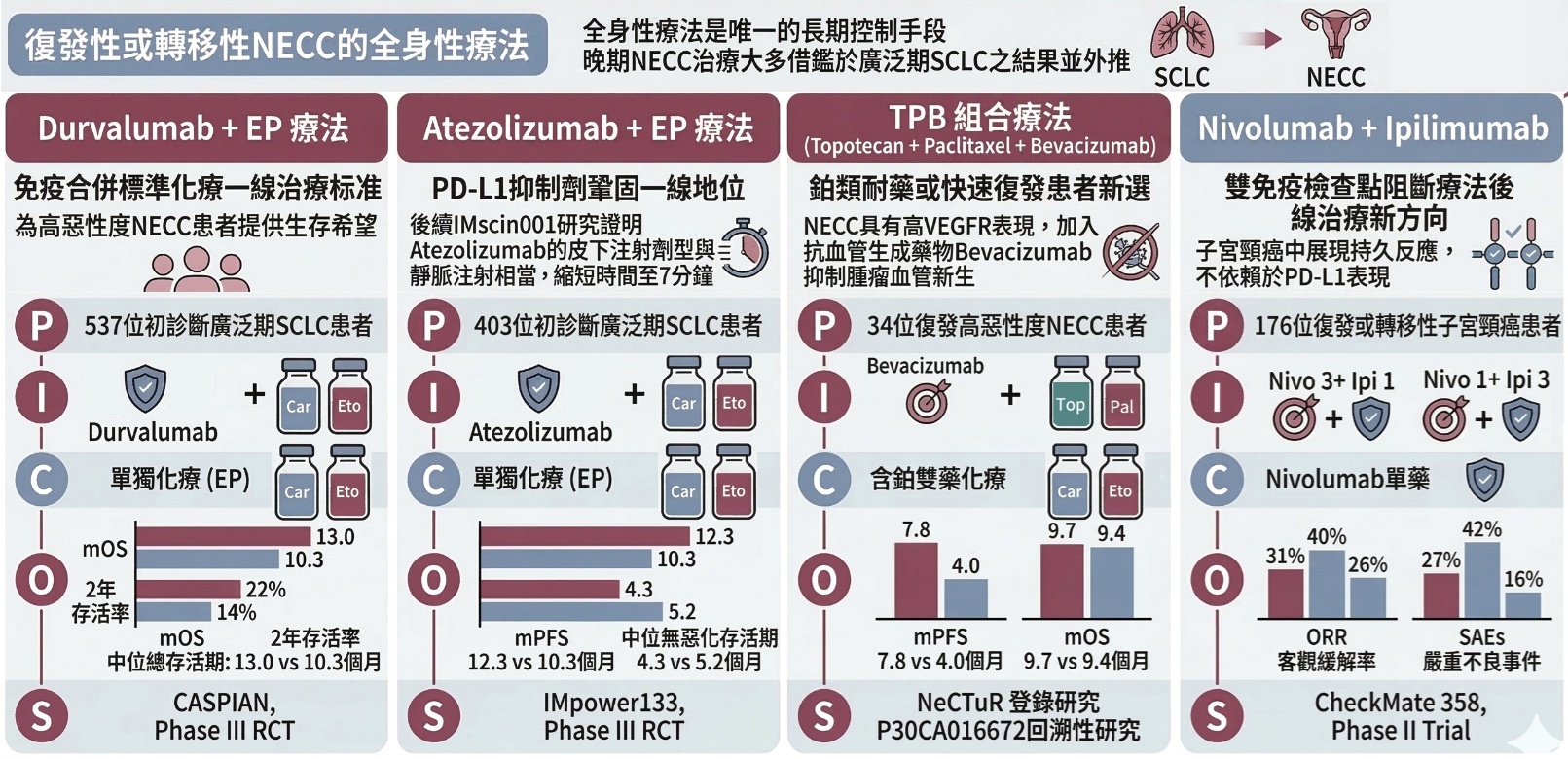
Durvalumab + EP 療法:CASPIAN試驗確立了免疫療法合併標準化療作為高惡性度NECC的一線治療標準。這為患者提供了在傳統化療外更具希望的生存選項。[52]
Atezolizumab + EP 療法:IMpower133研究鞏固了PD-L1抑制劑在一線神經內分泌癌治療中的地位。值得注意的是,後續的 IMscin001 研究證明 Atezolizumab 的皮下注射劑型具備與靜脈注射相當的暴露量與安全性,可大幅縮短治療時間至7分鐘。[53]
TPB (Topotecan + Paclitaxel + Bevacizumab) 組合療法:NeCTuR登錄研究對一線鉑類藥物產生耐藥,或在短時間內復發的NECC患者,分析TPB組合療法與含鉑雙藥化療之療效。結果顯示TPB組之存活期顯著較長。其藥理基礎在於NECC具有高VEGFR表現,因此加入抗血管生成藥物Bevacizumab,能有效抑制腫瘤血管新生。[54]
Nivolumab + Ipilimumab:雙免疫檢查點阻斷療法 (PD-1 + CTLA-4) 在子宮頸癌中展現了持久的反應,且這種反應不完全依賴於PD-L1的表現水平,為NECC患者提供了後線治療的新方向。[47]
表6.3 NECC全身性療法關鍵試驗 (由SCLC經驗外推適用)
| 試驗/對照組 | 試驗設計 | 納入族群 | 關鍵臨床數據結果 |
Durvalumab + EP vs. 單獨化療 (EP) |
CASPIAN, phase III RCT [52] | 537位初診斷廣泛期SCLC患者 | mOS: 13.0 vs. 10.3個月 (HR: 0.73, p=0.0047)* 2年存活率:22% vs. 14% |
| Atezolizumab + CP/ET vs. CP/ET | IMpower133, phase III RCT [53] | 403位初診斷廣泛期SCLC患者 | mOS: 12.3 vs. 10.3 個月 (HR: 0.70, p=0.0069)* mPFS: 4.3 vs. 5.2個月 |
| TPB (Topotecan + Paclitaxel + Bevacizumab) vs. 含鉑雙藥化療 |
P30CA016672回溯性研究 [54] | 34位復發高惡性度NECC患者 | mPFS: 7.8 vs. 4.0個月 (HR: 0.21, p=0.001)* mOS: 9.7 vs. 9.4個月 (HR: 0.54, p=0.13) |
Nivo 3+ Ipi 1 vs Nivo 1+ Ipi 3 Nivolumab單藥 |
CheckMate 358, phase II trial [47] | 176位復發或轉移性子宮頸癌患者 | ORR: 31% vs. 40% vs. 26% SAEs: 27% vs. 42% vs. 16% |
mPFS: median progression free survival; mOS: median overall survival; ORR: objective response rate; RCT: randomized controlled trial. SAEs: severe adverse events.
結語
子宮頸癌主要由高風險HPV持續感染所致,透過定期抹片、HPV DNA檢測與九價疫苗接種,能有效阻斷癌前病變進展。
子宮頸癌的正確診斷仰賴陰道鏡、切片與病理評估。FIGO 2018分期納入影像與病理淋巴結證據及組織學型別 (鱗狀、腺癌、腺鱗癌) 有助精準風險分層與個別化治療規劃。
早期子宮頸癌首選手術治療,低風險患者可採用A型單純子宮切除合併前哨淋巴結評估。術後輔助療法依病理中度與高度風險決定是否追加放療或化放療。
晚期與復發性疾病以同步化放療為首選治療;全身性療法則結合含鉑類化療、免疫檢查點抑制劑、bevacizumab;標靶藥物如RET抑制劑更能針對特定突變延長存活時長。
子宮頸小細胞神經內分泌癌雖罕見但高度侵襲,治療上多參考小細胞肺癌模式,以化療合併免疫治療為主,需多學科團隊嚴密追蹤管理。
作者:傅彥崴 藥師
References:
Evbuomwan O, Chowdhury YS. Physiology, Cervical Dilation. [Updated 2023 May 16]. In: StatPearls [Internet]. Treasure Island (FL): StatPearls Publishing; 2025 Jan-. Available from: https://www.ncbi.nlm.nih.gov/books/NBK557582/.
Devins K, Schwartz L. Histology. PathologyOutlines.com website. https://www.pathologyoutlines.com/topic/cervixnormalhistology.html. Accessed February 21st, 2026.
Zhang Y, Qiu K, Ren J, Zhao Y, Cheng P. Roles of human papillomavirus in cancers: oncogenic mechanisms and clinical use. Signal Transduct Target Ther. 2025;10(1):44. Published 2025 Jan 24.
Saraiya M, Unger ER, Thompson TD, et al. US assessment of HPV types in cancers: implications for current and 9-valent HPV vaccines. J Natl Cancer Inst. 2015;107(6):djv086. Published 2015 Apr 29.
Woodman CB, Collins SI, Young LS. The natural history of cervical HPV infection: unresolved issues. Nat Rev Cancer. 2007;7(1):11-22.
Zhang S, Xu H, Zhang L, Qiao Y. Cervical cancer: Epidemiology, risk factors and screening. Chin J Cancer Res. 2020;32(6):720-728.
International Agency for Research on Cancer. Cervix uteri: source, GLOBOCAN 2022. World Health Organization. Published 2024. Accessed February 22, 2026. https://gco.iarc.fr/today
Lin KY, Chiang YC, Hsu NW, et al. Trends in cervical cancer incidence and mortality in Taiwan, 1995–2021: a population-based study. Journal of Formosan Medical Association. 2024;123(1):45-56.
Zhang S, Xu H, Zhang L, Qiao Y. Cervical cancer: Epidemiology, risk factors and screening. Chin J Cancer Res. 2020;32(6):720-728.
Melnikow J, Henderson JT, Burda BU, Senger CA, Durbin S, Weyrich MS. Screening for Cervical Cancer With High-Risk Human Papillomavirus Testing: Updated Evidence Report and Systematic Review for the US Preventive Services Task Force. JAMA. 2018;320(7):687-705.
Cheng L, Wang Y, Du J. Human Papillomavirus Vaccines: An Updated Review. Vaccines (Basel). 2020;8(3):391. Published 2020 Jul 16.
Joura EA, Giuliano AR, Iversen OE, et al. A 9-valent HPV vaccine against infection and intraepithelial neoplasia in women. N Engl J Med. 2015;372(8):711-723.
National Comprehensive Cancer Network. NCCN Guidelines for Patients®: Cervical Cancer. 2026 ed. National Comprehensive Cancer Network; 2026. Accessed February 22, 2026. https://www.nccn.org/patientguidelines.
National Comprehensive Cancer Network. NCCN Clinical Practice Guidelines in Oncology (NCCN Guidelines®): Cervical Cancer. Version 2.2026. National Comprehensive Cancer Network; 2026. Accessed February 22, 2026.
Diaz De Vivar A, Roma AA, Park KJ, et al. Invasive endocervical adenocarcinoma: proposal for a new pattern-based classification system with significant clinical implications: a multi-institutional study. Int J Gynecol Pathol. 2013;32(6):592-601.
Stolnicu S, Hoang L, Almadani N, et al. Clinical correlation of lymphovascular invasion and Silva pattern of invasion in early-stage endocervical adenocarcinoma: proposed binary Silva classification system. Pathology. 2022;54(5):548-554.
Levinson K, Beavis AL, Purdy C, et al. Beyond Sedlis-A novel histology-specific nomogram for predicting cervical cancer recurrence risk: An NRG/GOG ancillary analysis. Gynecol Oncol. 2021;162(3):532-538.
Sedlis A, Bundy BN, Rotman MZ, Lentz SS, Muderspach LI, Zaino RJ. A randomized trial of pelvic radiation therapy versus no further therapy in selected patients with stage IB carcinoma of the cervix after radical hysterectomy and pelvic lymphadenectomy: A Gynecologic Oncology Group Study. Gynecol Oncol. 1999;73(2):177-183.
Höhn AK, Brambs CE, Hiller GGR, May D, Schmoeckel E, Horn LC. 2020 WHO Classification of Female Genital Tumors. Geburtshilfe Frauenheilkd. 2021;81(10):1145-1153.
Bhatla N, Berek JS, Cuello Fredes M, et al. Revised FIGO staging for carcinoma of the cervix uteri. Int J Gynaecol Obstet. 2019;145(1):129-135.
Fowler JR, Maani EV, Dunton CJ, et al. Cervical Cancer. [Updated 2023 Nov 12]. In: StatPearls [Internet]. Treasure Island (FL): StatPearls Publishing; 2025 Jan-. Available from: https://www.ncbi.nlm.nih.gov/books/NBK431093/.
Mathevet P, Lécuru F, Uzan C, et al. Sentinel lymph node biopsy and morbidity outcomes in early cervical cancer: Results of a multicentre randomised trial (SENTICOL-2). Eur J Cancer. 2021;148:307-315.
Cibula D, Marnitz S, Jarkovský J, et al. Sentinel lymph node biopsy without systematic pelvic lymphadenectomy in females with early-stage cervical cancer: final outcome of the SENTIX prospective, single-arm, noninferiority, international trial. Nat Cancer. 2025;6(9):1585-1594.
Plante M, Mayadev J, Santana-Offenberg V, et al. Simple versus radical hysterectomy in women with low-risk cervical cancer. N Engl J Med. 2024;390(9):812-821.
Schmeler KM, Pareja R, Lopez Blanco A, et al. ConCerv: a prospective trial of conservative surgery for low-risk early-stage cervical cancer. Int J Gynecol Cancer. 2021;31(10):1317-1325.
Ramirez PT, Frumovitz M, Pareja R, et al. Minimally Invasive versus Abdominal Radical Hysterectomy for Cervical Cancer. N Engl J Med. 2018;379(20):1895-1904.
Landoni F, Maneo A, Colombo A, et al. Randomised study of radical surgery versus radiotherapy for stage Ib-IIa cervical cancer. Lancet. 1997;350(9077):535-540.
Rotman M, Sedlis A, Piedmonte MR, et al. A phase III randomized trial of postoperative pelvic irradiation in Stage IB cervical carcinoma with poor prognostic features: follow-up of a gynecologic oncology group study. Int J Radiat Oncol Biol Phys. 2006;65(1):169-176.
Sedlis A, Bundy BN, Rotman MZ, Lentz SS, Muderspach LI, Zaino RJ. A randomized trial of pelvic radiation therapy versus no further therapy in selected patients with stage IB carcinoma of the cervix after radical hysterectomy and pelvic lymphadenectomy: A Gynecologic Oncology Group Study. Gynecol Oncol. 1999;73(2):177-183.
Peters WA 3rd, Liu PY, Barrett RJ 2nd, et al. Concurrent chemotherapy and pelvic radiation therapy compared with pelvic radiation therapy alone as adjuvant therapy after radical surgery in high-risk early-stage cancer of the cervix. J Clin Oncol. 2000;18(8):1606-1613.
Klopp AH, Yeung AR, Deshmukh S, et al. Patient-Reported Toxicity During Pelvic Intensity-Modulated Radiation Therapy: NRG Oncology-RTOG 1203. J Clin Oncol. 2018;36(24):2538-2544.
Pötter R, Tanderup K, Schmid MP, et al. MRI-guided adaptive brachytherapy in locally advanced cervical cancer (EMBRACE-I): a multicentre prospective cohort study. Lancet Oncol. 2021;22(4):538-547.
McCormack M, Eminowicz G, Gallardo D, et al. Induction chemotherapy followed by standard chemoradiotherapy versus standard chemoradiotherapy alone in patients with locally advanced cervical cancer (GCIG INTERLACE): an international, multicentre, randomised phase 3 trial. Lancet. 2024;404(10462):1525-1535.
Lorusso D, Xiang Y, Hasegawa K, et al. Pembrolizumab or placebo with chemoradiotherapy followed by pembrolizumab or placebo for newly diagnosed, high-risk, locally advanced cervical cancer (ENGOT-cx11/GOG-3047/KEYNOTE-A18): a randomised, double-blind, phase 3 clinical trial. Lancet. 2024;403(10434):1341-1350.
Liontos M, Kyriazoglou A, Dimitriadis I, Dimopoulos MA, Bamias A. Systemic therapy in cervical cancer: 30 years in review. Crit Rev Oncol Hematol. 2019;137:9-17.
Ang DJM, Chan JJ. Evolving standards and future directions for systemic therapies in cervical cancer. J Gynecol Oncol. 2024;35(2):e65.
Moore DH, Blessing JA, McQuellon RP, et al. Phase III study of cisplatin with or without paclitaxel in stage IVB, recurrent, or persistent squamous cell carcinoma of the cervix: a gynecologic oncology group study. J Clin Oncol. 2004;22(15):3113-3119.
Long HJ 3rd, Bundy BN, Grendys EC Jr, et al. Randomized phase III trial of cisplatin with or without topotecan in carcinoma of the uterine cervix: a Gynecologic Oncology Group Study. J Clin Oncol. 2005;23(21):4626-4633.
Tewari KS, Sill MW, Long HJ 3rd, et al. Improved survival with bevacizumab in advanced cervical cancer. N Engl J Med. 2014;370(8):734-743.
Chung HC, Ros W, Delord JP, et al. Efficacy and Safety of Pembrolizumab in Previously Treated Advanced Cervical Cancer: Results From the Phase II KEYNOTE-158 Study. J Clin Oncol. 2019;37(17):1470-1478.
Vergote I, González-Martín A, Fujiwara K, et al. Tisotumab Vedotin as Second- or Third-Line Therapy for Recurrent Cervical Cancer. N Engl J Med. 2024;391(1):44-55.
Colombo N, Dubot C, Lorusso D, et al. Pembrolizumab for Persistent, Recurrent, or Metastatic Cervical Cancer. N Engl J Med. 2021;385(20):1856-1867.
Oaknin A, Gladieff L, Martínez-García J, et al. Atezolizumab plus bevacizumab and chemotherapy for metastatic, persistent, or recurrent cervical cancer (BEATcc): a randomised, open-label, phase 3 trial. Lancet. 2024;403(10421):31-43.
Kitagawa R, Katsumata N, Shibata T, et al. Paclitaxel Plus Carboplatin Versus Paclitaxel Plus Cisplatin in Metastatic or Recurrent Cervical Cancer: The Open-Label Randomized Phase III Trial JCOG0505. J Clin Oncol. 2015;33(19):2129-2135.
TIVDAK (tisotumab vedotin-tftv) for injection, for intravenous use. US Food and Drug Administration website. https://www.accessdata.fda.gov/drugsatfda_docs/label/2025/761208s010lbl.pdf. Revised April 2024. Accessed March 11, 2026.
Tewari KS, Monk BJ, Vergote I, et al. Survival with Cemiplimab in Recurrent Cervical Cancer. N Engl J Med. 2022;386(6):544-555.
Oaknin A, Moore K, Meyer T, et al. Nivolumab with or without ipilimumab in patients with recurrent or metastatic cervical cancer (CheckMate 358): a phase 1-2, open-label, multicohort trial. Lancet Oncol. 2024;25(5):588-602.
Friedman CF, D'Souza A, Bello Roufai D, et al. Targeting HER2-mutant metastatic cervical cancer with neratinib: Final results from the phase 2 SUMMIT basket trial. Gynecol Oncol. 2024;181:162-169.
Repotrectinib in patients (pts) with NTRK fusion-positive (NTRK+) advanced solid tumors, including NSCLC: Update from the phase I/II TRIDENT-1 trial Solomon, B.J. et al. Annals of Oncology, Volume 34, S787 - S788.
Subbiah V, Wolf J, Konda B, et al. Tumour-agnostic efficacy and safety of selpercatinib in patients with RET fusion-positive solid tumours other than lung or thyroid tumours (LIBRETTO-001): a phase 1/2, open-label, basket trial. Lancet Oncol. 2022;23(10):1261-1273.
Miyoshi AI, Ueda Y, Kurita T, Kimura T, Yoshino K. Recent Advances in the Management of Small Cell Carcinoma of the Uterine Cervix. Anticancer Res. 2023;43(4):1397-1405.
Paz-Ares L, Dvorkin M, Chen Y, et al. Durvalumab plus platinum-etoposide versus platinum-etoposide in first-line treatment of extensive-stage small-cell lung cancer (CASPIAN): a randomised, controlled, open-label, phase 3 trial. Lancet. 2019;394(10212):1929-1939.
Horn L, Mansfield AS, Szczęsna A, et al. First-Line Atezolizumab plus Chemotherapy in Extensive-Stage Small-Cell Lung Cancer. N Engl J Med. 2018;379(23):2220-2229.
Frumovitz M, Munsell MF, Burzawa JK, et al. Combination therapy with topotecan, paclitaxel, and bevacizumab improves progression-free survival in recurrent small cell neuroendocrine carcinoma of the cervix. Gynecol Oncol. 2017;144(1):46-50.
整本手冊的 PDF 與重點簡報摘要在手冊首頁。